When comparing a regular trichologist to a medical trichologist, the difference lies in the advanced diagnostic technology. A medical trichologist utilizes higher-grade medical tools—such as punch biopsies, in-depth blood work, specialized scopes, advanced scans, and topical X-rays. This allows them to identify the actual cause of the issue rather than just treating the symptoms, getting to the root of the problem for a more permanent result.
If you’ve searched for help with hair loss, you’ve probably run into a wall of titles that all sound roughly the same: trichologist, medical trichologist, pure trichologist, dermatologist. They get used almost interchangeably online, but they don’t represent the same training, and they definitely don’t represent the same level of care. Here’s what actually separates a trichologist from a pure medical trichologist, so you know who to book when it matters.
A trichologist has trained specifically in hair and scalp health, usually through a certification course rather than a medical degree. The focus is on hair structure, scalp condition, and practical hair care advice.
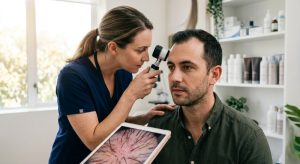
In practice, this usually looks like scalp analysis under a microscope or scalp camera, guidance on diet and lifestyle, product recommendations, and ongoing monitoring of how your hair responds over time. It’s genuinely useful support, particularly for general thinning or hair care questions.
Where it stops is diagnosis. A standard trichologist isn’t trained to identify an underlying medical cause, can’t prescribe anything, and can’t order bloodwork. If your hair loss turns out to be hormonal, autoimmune, or linked to a scalp disease, this is usually the point where a trichologist refers you elsewhere.
A pure medical trichologist goes further. The word “pure” here points to a much stricter, clinically grounded training path, one that combines advanced trichology certification with a diagnostic approach closer to how a clinician works. Instead of offering general hair care advice, they’re trying to find the actual cause of what’s happening on your scalp.
This isn’t a weekend course. Pure medical trichologists typically hold certification from recognised trichology institutions and stay affiliated with professional trichology or hair loss boards that require continued education. That ongoing accountability is a big part of what “pure” is meant to signal, and it’s worth asking about directly if you’re comparing practitioners.
Because the training goes deeper, a pure medical trichologist can diagnose the specific type of hair loss or scalp condition you’re dealing with, build a treatment plan around that diagnosis rather than general advice, and track your progress against it. If something falls outside trichology altogether, such as a dermatological or hormonal issue, they’ll usually coordinate with a doctor rather than guess.
Put simply, a general trichologist supports hair health. A pure medical trichologist diagnoses and treats it, while still staying within the boundaries of trichology rather than practising medicine outright.
The gap really comes down to depth of training and what kind of help you’re actually getting. A general trichologist offers cosmetic-level guidance after fairly limited certification. A pure medical trichologist offers diagnosis and a treatment plan built on clinical training and recognised board affiliation. If your hair loss is mild and probably lifestyle-related, a general trichologist may be all you need. If something feels off, hormonal, patchy, or just not responding to basic care, a pure medical trichologist is the better first call, either before or alongside a dermatologist.
Booking the wrong specialist wastes time, and often money too. Hair loss rarely has one clean cause. It can be genetics, hormones, stress, a nutrient deficiency, autoimmune activity, or a scalp infection, sometimes more than one of these at once. A practitioner without clinical-level trichology training may only be able to offer general advice, which delays getting to the actual answer. A pure medical trichologist is trained to look past the obvious symptom and work out what’s actually driving it, which usually gets you to an effective treatment faster.
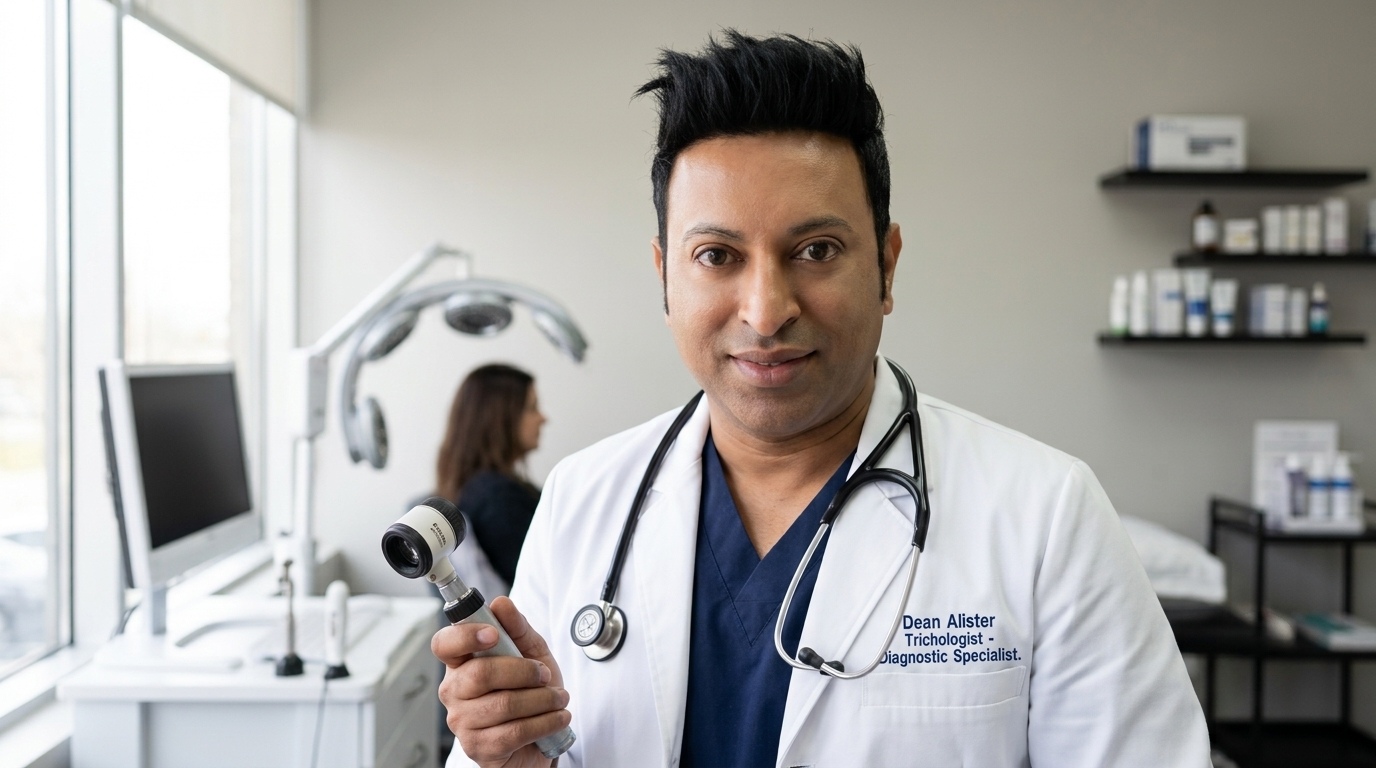
Dean Alister is a good illustration of what this looks like in practice. He’s a certified pure trichologist, accredited through the World Trichology Academy Certification (WTAC) and the School of Trichology London, and is associated with the International Board of Trichology and the American Board of Hair Loss Practitioners. He’s spent over 20 years specialising in diagnostic treatment for hair loss and scalp conditions.
That combination, layered certification plus ongoing board affiliation plus two decades of hands-on diagnostic work, is really what separates a pure medical trichologist from someone offering general hair advice.
Dean practises at HDA Clinic (High Definition Aesthetic Clinic), based at 25 Chrisoliet St, Jukskei Park, Fourways. The clinic focuses on diagnosing and treating hair loss properly rather than offering a one-size-fits-all product, covering both surgical hair loss treatment and non-surgical procedures, alongside skin health, IV therapy, and a personalised treatment plan for every patient who walks in. HDA Clinic also works with Path 24, an accredited pathology laboratory, when bloodwork is needed to confirm what’s actually causing a patient’s hair loss.
If you’d like to book a diagnostic consultation with Dean, HDA Clinic can be reached directly:
Be honest with yourself about what you’re actually seeing. Gradual thinning that runs in the family is a different problem to patchy loss, a sore scalp, or sudden shedding. For general thinning and hair care guidance, a trichologist is a fine place to start. If there’s any chance a medical or hormonal issue is involved, go straight to a pure medical trichologist and ask about their certifications and board affiliations before you book.
No. They hold advanced, clinically focused trichology certification and often work alongside doctors, but they don’t have a medical degree and can’t perform surgery.
Generally not, including pure medical trichologists. They can recommend treatments and refer you to a doctor if medication is needed.
Common ones include pattern hair loss, alopecia areata, scalp psoriasis, and seborrheic dermatitis, along with other hair and scalp disorders, assessed using clinical methods.
If it’s just hair thinning or scalp health, start with a pure medical trichologist. If you’re also dealing with wider skin or nail symptoms, a dermatologist might be the better fit, and the two can work together when needed.
Ask which body certified them and whether they hold ongoing accreditation with a recognised trichology or hair loss board. A pure medical trichologist should be able to answer that without hesitation.
HDA Clinic is based at 25 Chrisoliet St, Jukskei Park, Fourways. You can book a consultation with Dean Alister by calling 067 691 2721, emailing info@hdaclinic.co.za, or requesting a personalised treatment plan online.
Trichologist and pure medical trichologist get thrown around as if they mean the same thing, but the training and the type of care behind each title are genuinely different. Knowing which one you actually need saves you a consultation or two, and gets you to a real diagnosis instead of another round of general advice. If you’re in Johannesburg and want that diagnosis from a pure medical trichologist, Dean Alister at HDA Clinic is a solid place to start.